What’s on the ballot in 2026?
Ballot Builder
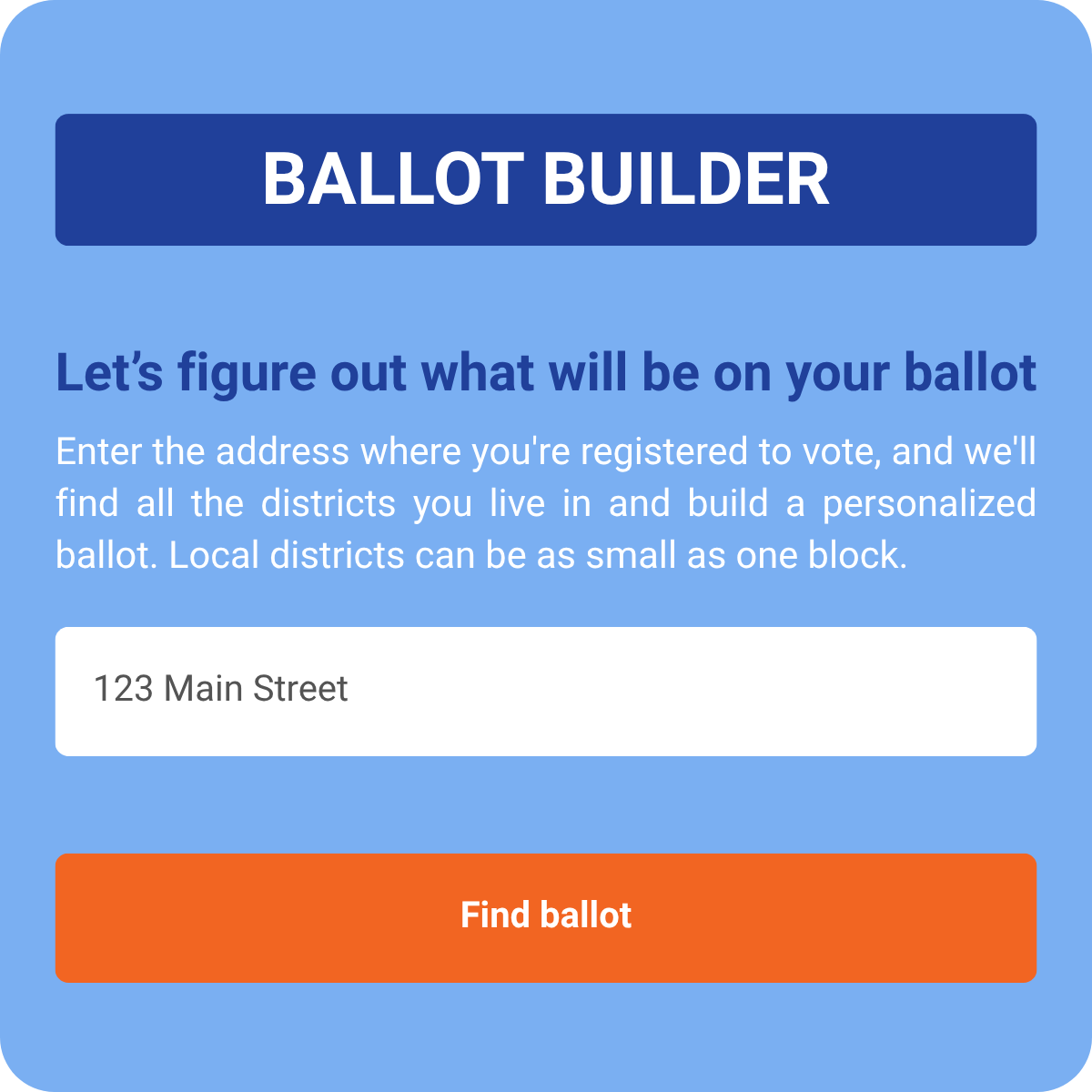
You can vote with confidence and insight thanks to Ballot Builder, our free, nonpartisan elections research guide.
Learn about the candidates and offices on your ballot.
Select your preferred candidates to create your customized sample ballot.
Email or print it and bring it with you into the voting booth.
Make sure to create an account! Creating an account let’s us email you when new candidate research is available.
Offices on the ballot
Federal offices
-
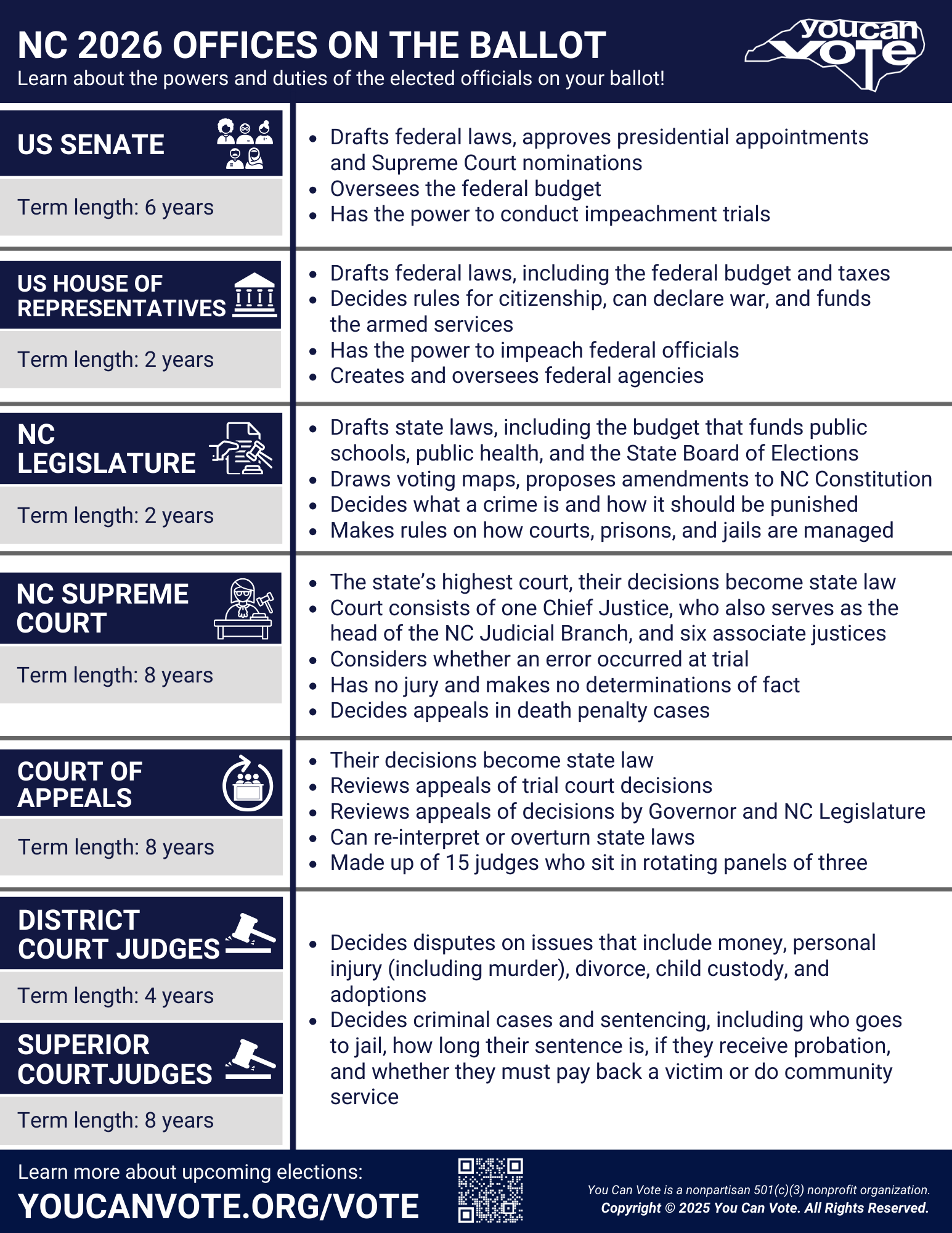
The US Senate drafts federal laws, approves presidential appointments and Supreme Court nominations, oversees the federal budget, and has the power to conduct impeachment trials.
-
The US House of Representatives makes federal laws including the budget and rules for citizenship and can declare war and regulate the armed services. Creates and oversees federal government agencies.
State offices
-
The General Assembly, North Carolina’s legislature, writes state laws and the budget which funds public schools, public health, and the State Board of Elections. They draw voting maps and write election laws for our state. They decide what is a crime and how it should be punished and make rules on how courts, prisons, and jails are managed.
-
The Supreme Court of North Carolina makes rules for NC appellate courts, decides cases from lower courts when someone claims that the law was misapplied, and decides appeals in death penalty cases.
-
The Court of Appeals reviews trial court decisions that are appealed. Has judicial review power over the Governor and NC Legislature and can interpret or overturn state laws. Their decisions become law.
-
District and Superior Court Judges decide disputes on issues that include money, personal injury (including murder), divorce, child custody, and adoptions. They decide criminal cases, who goes to jail and for how long, if someone receives probation, and whether someone must pay back a victim or do community service.
Local offices
-
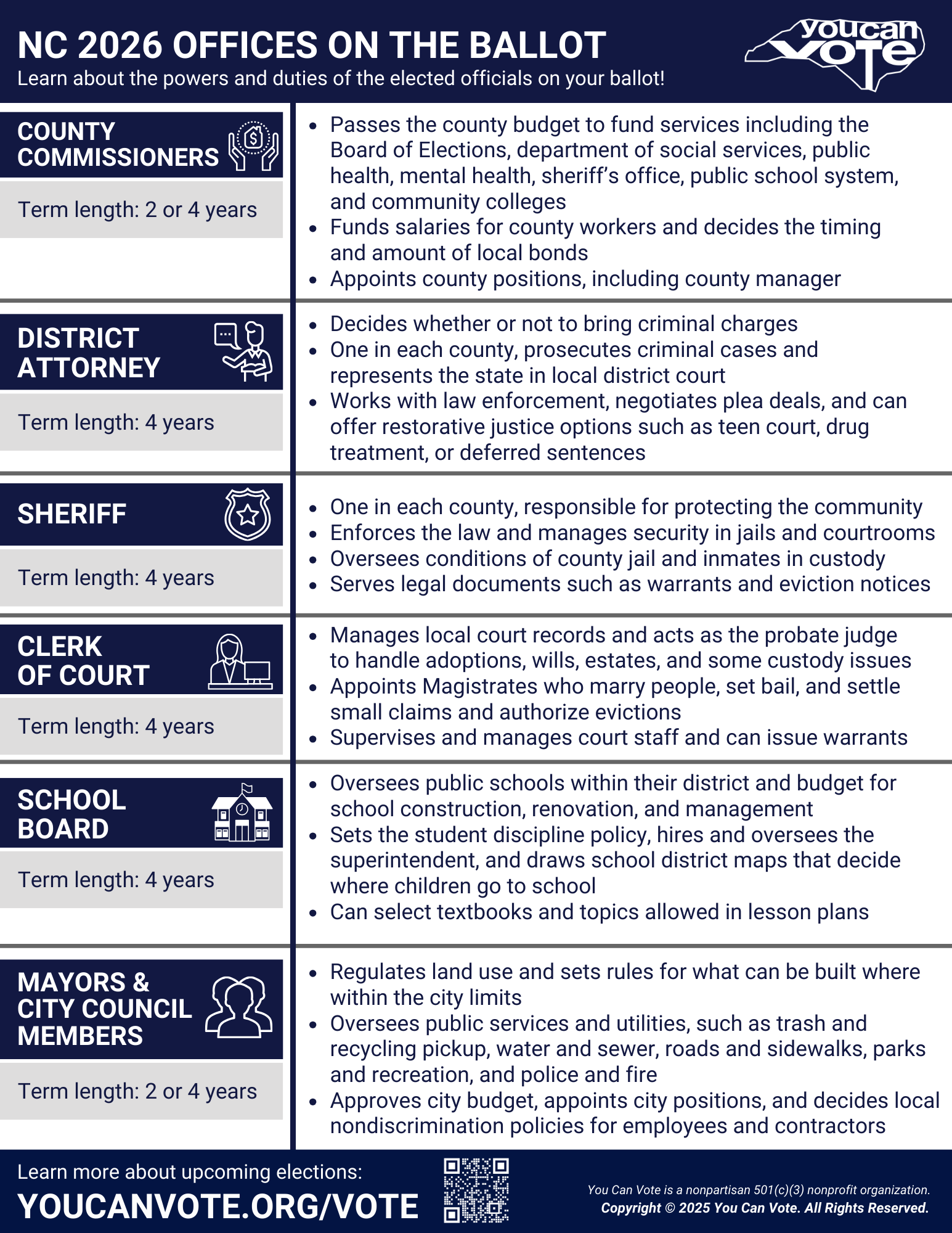
Mayors and Council Members decide what can be built where, provide public services and utilities such as trash and recycling pickup, water and sewer, roads and sidewalks, parks and recreation, and police and fire. They also decide local equal employment opportunity and nondiscrimination policies for employees and contractors and appoint city positions.
-
County Commissioners pass the budget that funds services including the County Board of Elections, public health, safety, law enforcement, human services, public schools, and community colleges. They fund salaries for county workers and decide the timing and amount of local bonds. The Board appoints county positions including the tax supervisor, tax collector, and county attorney.
-
School board members are in charge of public schools within the district and approve and fund school construction, renovation, and management. They set the student discipline policy, hire and oversee the superintendent, and draw school district maps that decide where children go to school. They can select or restrict textbooks or topics allowed in lesson plans.